
The Jewel: Champagne Citrine
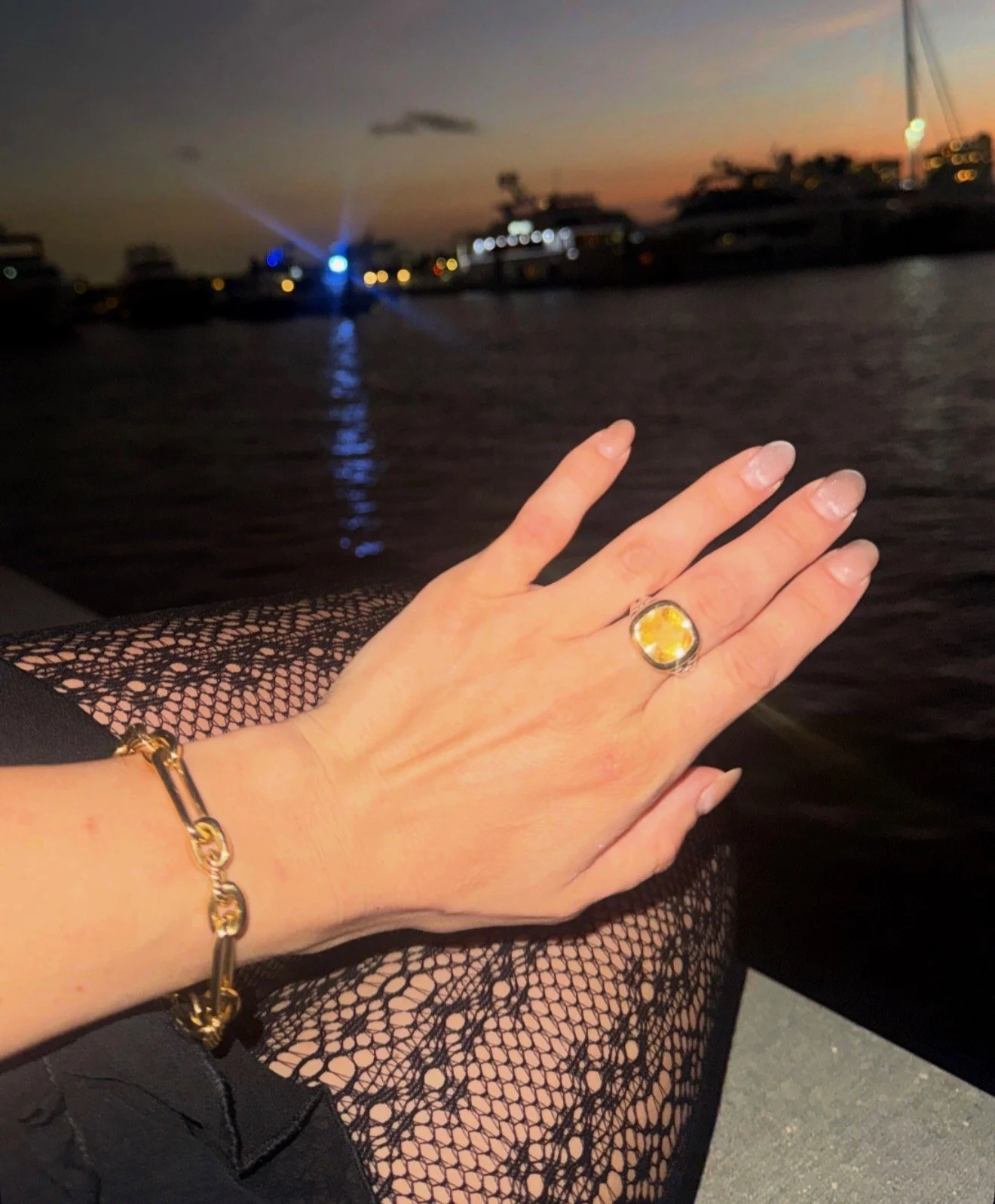
The warm, honeyed gemstone that feels made for autumn.
There is something about champagne citrine that I find particularly beautiful.
It isn't quite yellow, and it isn't quite brown. Depending on the stone, it can move from pale champagne and warm honey to deeper cognac, with a softness that feels especially beautiful against yellow gold.
Citrine is the yellow-to-orange variety of quartz, and its color is caused by iron. It is relatively abundant compared with many of the colored gemstones I find myself drawn to, which is part of what makes it interesting to me. A beautiful stone doesn't necessarily have to be rare to be compelling.
What I love most about champagne-colored citrine is its restraint.
Bright yellow gemstones can feel exuberant. Deep orange stones can feel dramatic. Champagne citrine sits somewhere in between. It has warmth without demanding attention, which makes it particularly appealing in jewelry that is meant to be worn often.
And it looks wonderful with gold.
There is something almost old-world about the combination of a warm citrine, yellow gold, and a slightly imperfect vintage setting. It feels like something you might discover in an antique jewelry box rather than something selected from a display case that morning.
A stone for collecting.
Citrine has a long history in jewelry, and it has appeared in pieces ranging from antique and Art Deco jewelry to more contemporary designs.
One of the reasons I think it works particularly well in vintage jewelry is its color. Warm stones tend to develop an especially beautiful relationship with aged yellow gold, creating that slightly faded, honeyed palette that I love.
It's also a relatively durable gemstone for everyday jewelry. Quartz has a Mohs hardness of 7, although that doesn't mean it is impervious to scratching or damage. As with any gemstone, the setting and the way a piece is worn matter.
There is also an important distinction when shopping for citrine: much of the citrine available today is heat-treated amethyst. This is a common and accepted treatment, but I think understanding what you're buying makes the experience of collecting much more interesting.
That's becoming one of my favorite parts of learning about gemstones.
Where did it come from?
Was it treated?
How was it cut?
Why did the jeweler choose that particular stone?
Who wore it before you?
Those questions are what make jewelry feel less like an accessory and more like an object with a history.
Stone: Citrine
Family: Quartz
Color: Yellow, golden, champagne, orange to brown
Hardness: 7 on the Mohs scale
Birthstone: November
Common treatment: Heat treatment is widely used; much commercial citrine is heat-treated amethyst